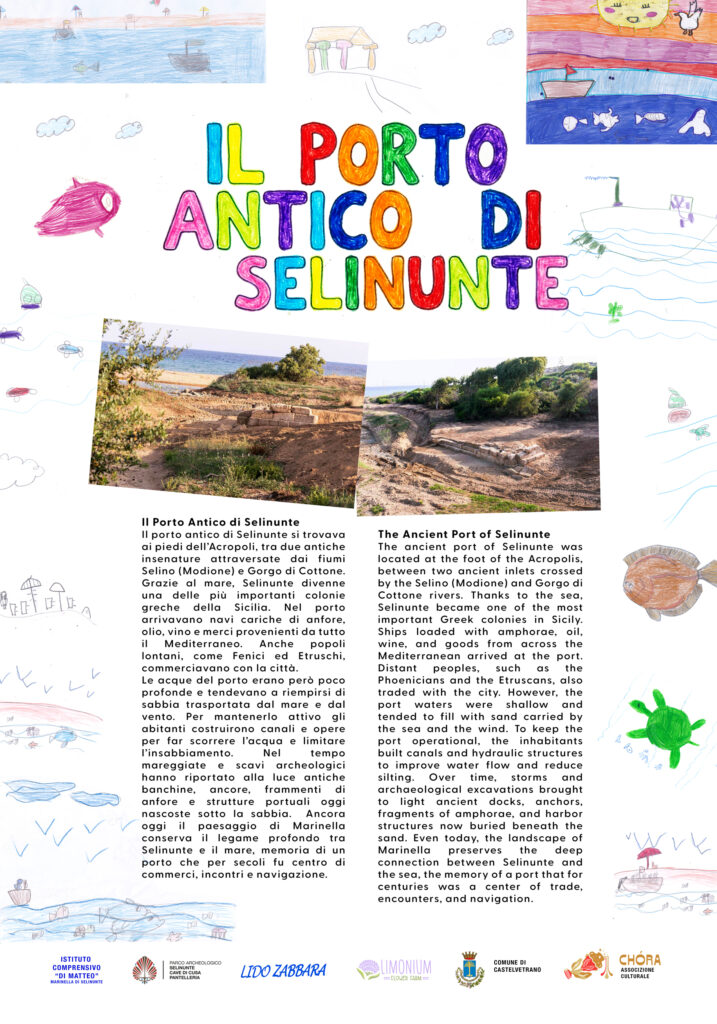
Il porto antico di Selinunte si trovava ai piedi dell’Acropoli, tra due antiche insenature attraversate dai fiumi Selino (Modione) e Gorgo di Cottone.
Grazie al mare, Selinunte divenne una delle più importanti colonie greche della Sicilia. Nel porto arrivavano navi cariche di anfore, olio, vino e merci provenienti da tutto il Mediterraneo. Anche popoli lontani, come Fenici ed Etruschi, commerciavano con la città.
Le acque del porto erano però poco profonde e tendevano a riempirsi di sabbia trasportata dal mare e dal vento. Per mantenerlo attivo gli abitanti costruirono canali e opere per far scorrere l’acqua e limitare l’insabbiamento. Nel tempo mareggiate e scavi archeologici hanno riportato alla luce antiche banchine, ancore, frammenti di anfore e strutture portuali oggi nascoste sotto la sabbia. Ancora oggi il paesaggio di Marinella conserva il legame profondo tra Selinunte e il mare, memoria di un porto che per secoli fu centro di commerci, incontri e navigazione.
The ancient port of Selinunte was located at the foot of the Acropolis, between two ancient inlets crossed by the Selino (Modione) and Gorgo di Cottone rivers. Thanks to the sea, Selinunte became one of the most important Greek colonies in Sicily. Ships loaded with amphorae, oil, wine, and goods from across the Mediterranean arrived at the port. Distant peoples, such as the Phoenicians and the Etruscans, also traded with the city. However, the port waters were shallow and tended to fill with sand carried by the sea and the wind. To keep the port operational, the inhabitants built canals and hydraulic structures to improve water flow and reduce silting. Over time, storms and archaeological excavations brought to light ancient docks, anchors, fragments of amphorae, and harbor structures now buried beneath the sand. Even today, the landscape of Marinella preserves the deep connection between Selinunte and the sea, the memory of a port that for centuries was a center of trade, encounters, and navigation.